
Tulips, Tuk-Tuks, and Technology
A quick but memorable stop in Amsterdam helped break up the long 27-hour journey from San Diego to Tanzania. We've become fans of stopping somewhere along the way, and this time we spent three days enjoying one of our favorite European cities.
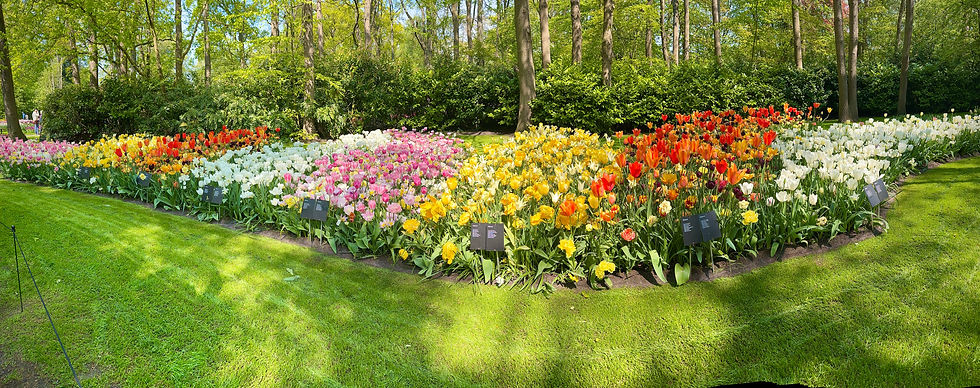
Seeing the tulips had been on our bucket list for years. We visited Keukenhof, about 45 minutes outside Amsterdam. Known as the Garden of Europe, it is the largest flower garden in the world, with more than seven million blooming bulbs and over 800 varieties of tulips. Every color imaginable seemed to be on display. The fact that the gardens are replanted every year makes the scale even more impressive.
We also squeezed in a visit to the Rijksmuseum to see some old favorites. We never seem to tire of the Dutch masters, especially Johannes Vermeer, whose paintings capture light so beautifully that they almost seem to glow.
Mark's highlight was rowing on the Amstel River with fellow SDRC rower Jan DeJong at Willem III Roeivereniging. The winding river, low bridges, and occasional windmill made for a much more scenic row than the usual morning on Mission Bay.
Then it was on to Moshi and back into the classrooms.




Two New Schools!
With this year's trip we officially launched our foundation 'STAWI' in Moshi, Tanzania. STAWI means 'Thrive' in Swahili and we hope we are giving students the opportunity to Thrive through the computer classrooms we are putting in place.
This year we taught everything from basic computer skills and mouse control to Microsoft Paint, Word, Excel, and Scratch programming. Mornings were usually spent at secondary schools, afternoons at primary schools, and occasionally we found ourselves teaching at different schools on the same day.
Betsey especially enjoyed working with the youngest students, helping kindergarten through second graders master the mouse and keyboard through games and activities. Teaching little ones is equal parts education, entertainment, and crowd control. One teacher had a brilliant technique for getting instant silence. She would say, "Say M." The room immediately became quiet. When we asked why, she explained, "Because they can't talk while saying M." Hard to argue with results.
Not everything went exactly according to plan. We lost power several times, which required some creative improvisation. And getting to Mji Mpya was an adventure in itself. The road was a lively combination of ruts, rocks, and bumps that seemed determined to test both the tuk-tuk and its passengers. Joseph navigated it all with the confidence of a rally driver while we bounced along in the back, grateful for sturdy seats and a good sense of humor. Every trip felt a bit like a safari ride—just without the wildlife.
One of the most rewarding moments was watching students use Scratch on actual computers. Scratch is a block-based programming language where students snap commands together to create animations and games. Until now, many students had only learned it from diagrams in textbooks. Once they got their hands on the computers, creativity exploded.
Soon there were racing cars, dancing animals, colorful backgrounds, and every sound effect imaginable. Students quickly discovered they could add engine noises, bells, animal sounds, and musical notes to their projects. The classroom volume increased noticeably, but so did the excitement. For many of the students, this was the first time programming had truly come alive.


Let's Just Have a Bar-B-Q
Both schools hosted appreciation ceremonies complete with ribbon cuttings, cakes, lunches, and speeches. We were honored with Maasai blankets, and Betsey received a beautiful dress as a thank-you gift. Even more encouraging, officials from the Moshi Municipal Education Council have started stopping by schools to congratulate teachers and recognize the progress being made.
One of the biggest surprises of the trip began as a simple idea. We wanted to host a small barbecue to thank the many friends and partners who have helped make the program successful. After discussing it with our partners at Simbas Footprints and ACTT, we were persuaded to think bigger.
A week later, our barbecue had somehow transformed into a full education conference.
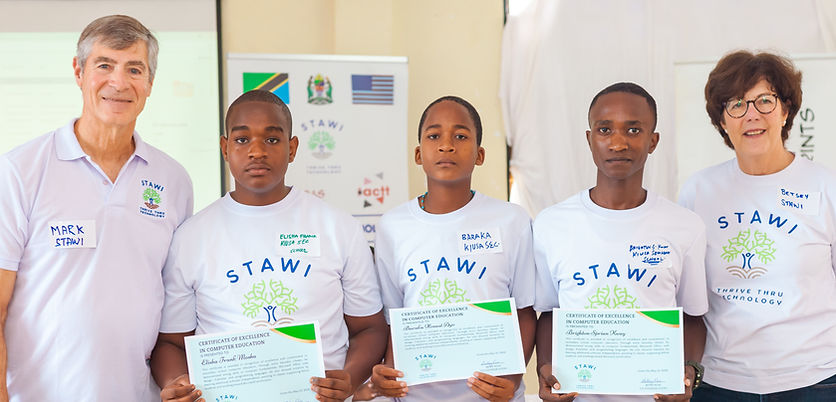
What started as a gathering of perhaps 40 ICT teachers and head teachers grew into an event for about 70 participants, including representatives from prospective schools, municipal education leaders, and students being recognized for excellence. There were conference T-shirts, catered lunches, presentations, panel discussions, and yes, candy on every table.
The focus was practical: How do we improve computer classrooms? How do we encourage teachers to use technology in everyday lessons? How do schools learn from one another rather than solving the same problems independently?
The response exceeded anything we expected. Teachers shared ideas, built new relationships, and began creating their own plans for moving technology education forward in Moshi. The energy in the room was remarkable. Rather than waiting for outside organizations to provide answers, participants were already discussing how they could help one another and collaborate across schools.
Perhaps most encouraging of all, the conference seemed to mark a turning point for Stawi. What began with a single school computer lab is increasingly being viewed as a catalyst for expanding technology education throughout Moshi. We left feeling that the momentum now belongs not just to Stawi, but to a growing community of educators committed to helping students thrive through technology.
And to top it all off, we even made the local news.
Not bad for what was originally supposed to be a barbecue.


